


Infinite Cultivation
4.6740.00 Reviews
App Specs
- Version
- 2.0.8
- Updated On
- License
- Free
- Downloads
- 100,000+
- Developer
- WINDFORCE INC.( CMN Online)
- Categories
- Word
- Platform
- Android
Screenshots

 Analysis by AppCompare
I approach Infinite Cultivation less as a game to race through and more as something to dip into between other parts of the day. Its cultivation theme gives it a recognizable fantasy frame, while its social and home-decoration angle makes it different from a straightforward word puzzle or a purely solitary idle game. That mix is appealing if you enjoy gradual progress and a little personal expression, but it also means this is not the best fit for someone who wants a brisk, tightly focused word challenge.
What kind of game it is
This is a free word game from WINDFORCE INC.( CMN Online, with a cultivation setting and a social idle approach. The idea of steady advancement suits short visits: I can check in, make a little progress, and leave without needing to treat every session like a long gaming appointment. The home-decorating element gives that progress a visible, personal destination rather than making advancement feel entirely abstract.
That combination is worth understanding before installing. Players who like word games primarily for solving a succession of compact puzzles may find the cultivation and social framing less direct than they want. By contrast, if I enjoy having an ongoing world to return to and appreciate decorating as part of a game’s appeal, the slower rhythm makes more sense. The game’s short description is “Infinite Cultivation,” and that phrase fits the sense of a continuing journey better than a quick, self-contained word challenge.
Readability and navigation in everyday play
A game’s menus and text matter especially when play is built around frequent check-ins. I would judge the interface not only by whether it looks attractive, but by whether I can quickly tell what deserves attention and where to go next. In a cultivation game, several kinds of progress can compete for attention, so a clear visual hierarchy is important: the most useful next action should be easier to spot than decorative details or secondary options.
For a first session, I would take a few minutes to explore the main screens rather than tapping through everything as fast as possible. Notice which areas relate to character progress, which lead to social activity, and where home decoration fits. That small orientation step can make later short sessions less confusing. It is also a practical way to decide whether the game’s layered presentation feels inviting or busy to you.
There is a trade-off here. A world with several activities can offer more reasons to return, but it can also ask the player to remember where different tasks live. If you prefer a word game that opens directly onto one puzzle with no surrounding systems, that extra navigation may feel like overhead. I see the broader structure as part of the appeal for players who want an ongoing game, not as a universal improvement over a simple puzzle screen.
Motor and sensory considerations
The idle format can suit people who do not want every moment of play to depend on continuous, rapid input. It suggests a more measured pace than games built around reflexes, which may be welcome when I have only one hand free or want to play without concentrating on repeated fast actions. The word-game identity may also appeal to players who prefer thinking and reading over twitch-based challenges.
Worth Reading Before You Choose

EA SPORTS FC Mobile 26 Is a Bigger Football Game, but It Takes Time

Flipboard Shows What News Apps Must Do Beyond the Feed

Switching to Android Auto Means Rethinking Your Driving Routine

Google Calendar Makes a Crowded Week Easier to Manage

Ludo King Makes the Most of the Minutes Between Plans

Baby Panda World Brings Quick Play to Modern Phones, but Its Game Library Feels Busy
That said, I would not assume that “idle” automatically means effortless or accessible for every player. Menus, text, decorative scenes, and social areas can still require attention, and a player’s comfort will depend on how the interface appears on their own device. If small text or visually dense screens are difficult for you, it is sensible to check the opening screens carefully and decide whether the important information is comfortable to read before investing time in long-term progress.
Sound is another personal consideration. A game’s audio can add atmosphere, but some players prefer to play quietly in shared spaces or reduce sensory input. I would try a brief session in the environment where I expect to play, such as on a commute or during a break, and see whether the presentation feels calming or distracting. The key point is to choose the setting and pace that work for you rather than assuming that a fantasy atmosphere will feel relaxing to everyone.
When and where it fits
A realistic use case is a short break at home: I open the game, check what I can do, spend a little time on progress or decoration, and put it away when the break ends. That kind of routine suits a game designed around ongoing cultivation better than trying to squeeze it into a situation where I need to watch every second, such as crossing a busy street or keeping close attention on a conversation.
On a commute, I would treat it as something to play only when I am safely seated and have a comfortable view of the screen. Social elements can make a game feel more connected, but they also make it less purely private than a solo word puzzle. If you want a quiet, self-contained activity with no interest in interacting with other players, the social side may not add much for you. If you enjoy sharing a hobby with others, it can give the ongoing world a more communal feel.
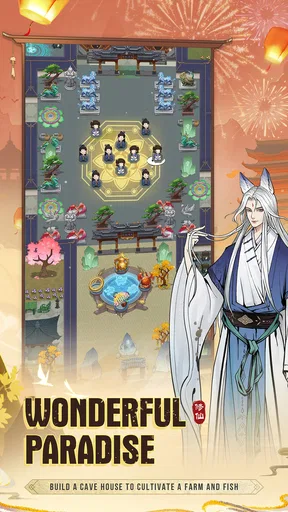
The home-decoration angle is useful for a different reason: it gives players who like visual customization a personal project alongside progression. My practical tip would be to treat decorating as a way to make the experience feel like yours, not as a checklist that has to be completed before the game becomes enjoyable. That keeps the creative side rewarding even if your available play time varies from day to day.
How it compares with other word games
Compared with a conventional word puzzle, this game places more emphasis on a continuing setting and a broader loop than simply solving one clue or board and moving on. That can be a welcome change if familiar word challenges have started to feel interchangeable. The cultivation theme supplies a reason to return, while decorating offers a creative outlet that a bare puzzle format usually does not provide.
The trade-off is focus. Someone who wants an immediate brain teaser with little setup may be better served by a classic crossword, word-search, or daily puzzle app. Those alternatives are often easier to pick up for a single, clearly bounded challenge. Here, I would choose the game when I want the surrounding world and its gradual rhythm as much as I want word-based play. The best comparison is not “which one has more content?” but “do I want one puzzle now, or an ongoing game to revisit?”
It also differs from a conventional idle game because the word-game framing and domestic customization give it a more specific identity than watching a number rise. If your favorite part of idle games is optimizing a deep chain of systems, you may want to see whether this particular blend satisfies that preference. If what you value is relaxed continuity with a personal touch, the balance is more likely to work.
Progress, spending, and sensible expectations
The game is free to download, though in-app purchases range from $0.99 to $99.99 per item. That wide span is a reason to make a personal spending plan before buying anything, not a reason to assume that a purchase is necessary. I would first try the free experience and decide whether the regular loop is enjoyable on its own. If a game only feels worthwhile after paying, that is useful information about whether it suits your habits.
For players who are prone to making quick purchases, a helpful approach is to pause before confirming and ask what the item would actually change about your play. Does it support a feature you already enjoy, or is it simply tempting because progress feels slow in that moment? Keeping that distinction in mind is especially useful in games built around long-term advancement, where impatience can make spending feel more urgent than it really is.
The game is rated for Everyone, and it has a 4.6 average from around 11,000 ratings, with more than 100,000 installs. Those figures suggest that it has found an audience, but they cannot tell me whether its pace, visual presentation, or social emphasis will suit a particular person. I would use the first few sessions to judge those qualities directly rather than treating popularity as a guarantee.
Who is likely to enjoy it—and who may not
I would recommend giving it a look if you like word games but want more context around the puzzles, enjoy fantasy cultivation as a theme, or find decorating a satisfying side activity. It may also suit someone who prefers to make small amounts of progress across several short visits instead of settling in for one long session. Current version 2.0.8 requires Android 6.0 or later, so Android users should check that their device meets that requirement before planning to play.
I would be more cautious if you want a game that is immediately understandable with no menus to explore, dislike ongoing progression, or find social features intrusive. It is also not an obvious match if you want a word game focused solely on testing vocabulary under pressure. The central question is whether the surrounding cultivation world adds motivation for you or distracts from the word play you came for.
One useful way to decide is to try a short session at a time when you are not rushed. See whether you can find a satisfying next step, whether the home element makes you curious to return, and whether the social dimension feels optional in spirit even if it is present in the game. If those parts feel like chores rather than reasons to play, a simpler word app is likely a better choice.
Unfolding the Mysteries of Ancient China
First things first, the setting of Infinite Cultivation is one of its biggest draws. Imagine stepping into a beautifully detailed world that’s rich with mythology and ancient Chinese lore. The game does a fantastic job of blending these elements to create an environment that feels both immersive and magical. You’ll find yourself journeying through serene landscapes, bustling markets, and mystical forests, each rendered with a level of detail that keeps you glued to the screen.
As you navigate through this world, you'll encounter a variety of characters, each with their own stories and quests. It’s like being part of an epic movie where you’re the main star. And trust me, the storyline is nothing short of captivating. You get to explore themes of power, betrayal, and redemption, all while building your own path to immortality.
The Art of Cultivation
At its core, the game is all about cultivating your character’s spiritual abilities. You start off as a mere mortal, but through dedication and strategic choices, you can ascend through the ranks to become a powerful cultivator. This is where the game’s depth really shines. It’s not just about mindless tapping; it requires strategy and planning.
The cultivation process involves a series of tasks and challenges that test your skills and decision-making abilities. You’ll need to manage resources, gather allies, and make choices that affect your journey. And let’s not forget the combat system, which is both intuitive and challenging. Each battle feels like a test of your skills and strategy, keeping the adrenaline pumping.
Graphics and Soundtrack
Now, let’s talk about the visuals and audio. The graphics are nothing short of stunning. The developers have put a lot of effort into creating a visually appealing game, and it shows. Each scene is beautifully crafted, with vibrant colors and intricate details that bring the world to life.
The soundtrack complements the visuals perfectly. It’s an auditory journey that enhances the overall experience, making you feel like you’re truly part of this mystical world. The music is soothing and epic in equal measure, with tracks that adapt to the storyline and your actions within the game.
Community and Social Features
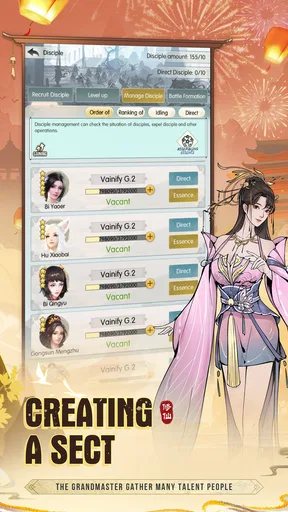
One of the surprising aspects of the game is its strong community. Join a guild, chat with other players, and participate in community events. It’s a great way to connect with like-minded gamers who share your passion for cultivation and ancient lore.
The social features are well-integrated, allowing for seamless interaction with other players. Whether you’re teaming up for a quest or just chatting about strategies, the community aspect adds another layer of engagement to the game.
Final Thoughts
In a world where mobile games often feel repetitive, this cultivation game stands out by offering a rich, immersive experience that’s both engaging and rewarding. Whether you’re a fan of mythology, strategy games, or just looking for something new, this app has something for everyone.
So, if you’re ready to embark on a journey that challenges your mind and fuels your imagination, give it a try. You might just find yourself hooked on the path to immortality.
Pros
- Engaging storyline with immersive plot.
- User-friendly interface for easy navigation.
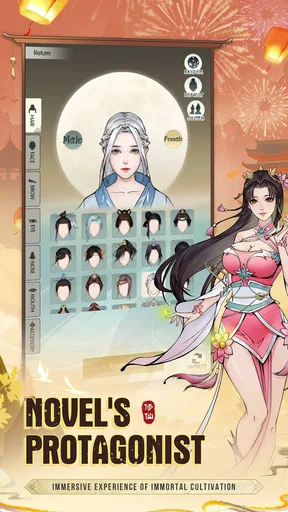
- Wide variety of character customization options.
- In-depth crafting and resource management system.
- Regular updates with new content and events.
Cons
- In-app purchases can be expensive.
- Requires constant internet connection.
- Occasional bugs impacting gameplay.
- High battery consumption during play.
- Steep learning curve for beginners.
FAQs for Infinite Cultivation
What is the main objective of Infinite Cultivation?
Infinite Cultivation is a role-playing game that immerses players in the world of Xianxia cultivation. The main objective is to develop your character's skills, embark on mystical adventures, and ascend through various realms. Players engage in quests, build alliances, and explore a rich narrative filled with intriguing challenges and lore.
Is Infinite Cultivation free to play?
Yes, Infinite Cultivation is free to download and play on both Android and iOS devices. However, it offers in-app purchases that enhance gameplay, such as premium items and additional currency. While these purchases can provide advantages, they are not necessary to enjoy the game fully.
What are the system requirements for Infinite Cultivation?
For Android, Infinite Cultivation requires a device running Android 5.0 or higher. For iOS users, the game is compatible with iOS 10.0 or later. It is crucial to have a stable internet connection for an optimal gaming experience, as the game includes online features and real-time updates.
Does Infinite Cultivation offer multiplayer features?
Yes, Infinite Cultivation includes multiplayer elements that allow players to form alliances, compete in battles, and participate in events with others worldwide. The social aspects of the game enhance the experience, enabling players to collaborate and strategize with friends and fellow cultivators.
How does progression work in Infinite Cultivation?
Progression in Infinite Cultivation involves leveling up your character by completing quests, defeating enemies, and learning new skills. As players advance, they unlock new realms and gain access to more powerful abilities and equipment. The game encourages strategic planning and skill management to reach higher cultivation levels.


